AI로 음악을 만들어본 적이 있다면, 한 번쯤 이런 질문을 마주쳤을 겁니다. "이거 상업적으로 써도 되나?" 답을 미루기 딱 좋은 질문이었습니다. 어차피 다들 쓰고 있으니까요. 하지만 2026년 7월, 그 질문에 법원이 답을 내놓을 참입니다.
지금 무슨 일이 벌어지고 있나
이야기는 2024년 6월로 거슬러 올라갑니다. 미국음반산업협회(RIAA)가 유니버설뮤직, 소니뮤직, 워너뮤직을 대리해 AI 음악 생성 플랫폼 Suno와 Udio를 저작권 침해로 고소했습니다. 두 회사가 수백만 개의 저작권 보유 녹음을 허락도, 라이선스도, 보상도 없이 학습에 사용했다는 게 핵심 주장입니다.
Suno와 Udio는 공정 이용(fair use)을 방어 논리로 내세웠습니다. AI 학습은 원곡을 변형하는 창작 행위이기 때문에 법적으로 보호받아야 한다는 주장입니다. 이 다툼은 2년 가까이 이어졌고, 이제 결정적인 국면에 들어섰습니다.
2026년 5월, 음반사들은 오디오 핑거프린팅 기술로 Suno의 학습 데이터를 분석한 결과를 근거로 61,026개의 녹음을 소송에 추가해달라고 법원에 요청했습니다. 최초 소장에 명시됐던 곡은 560곡이었는데, 실제로는 수백만 곡 규모의 저작권 보유 녹음이 학습 데이터에 포함돼 있었다는 게 이들의 주장입니다.
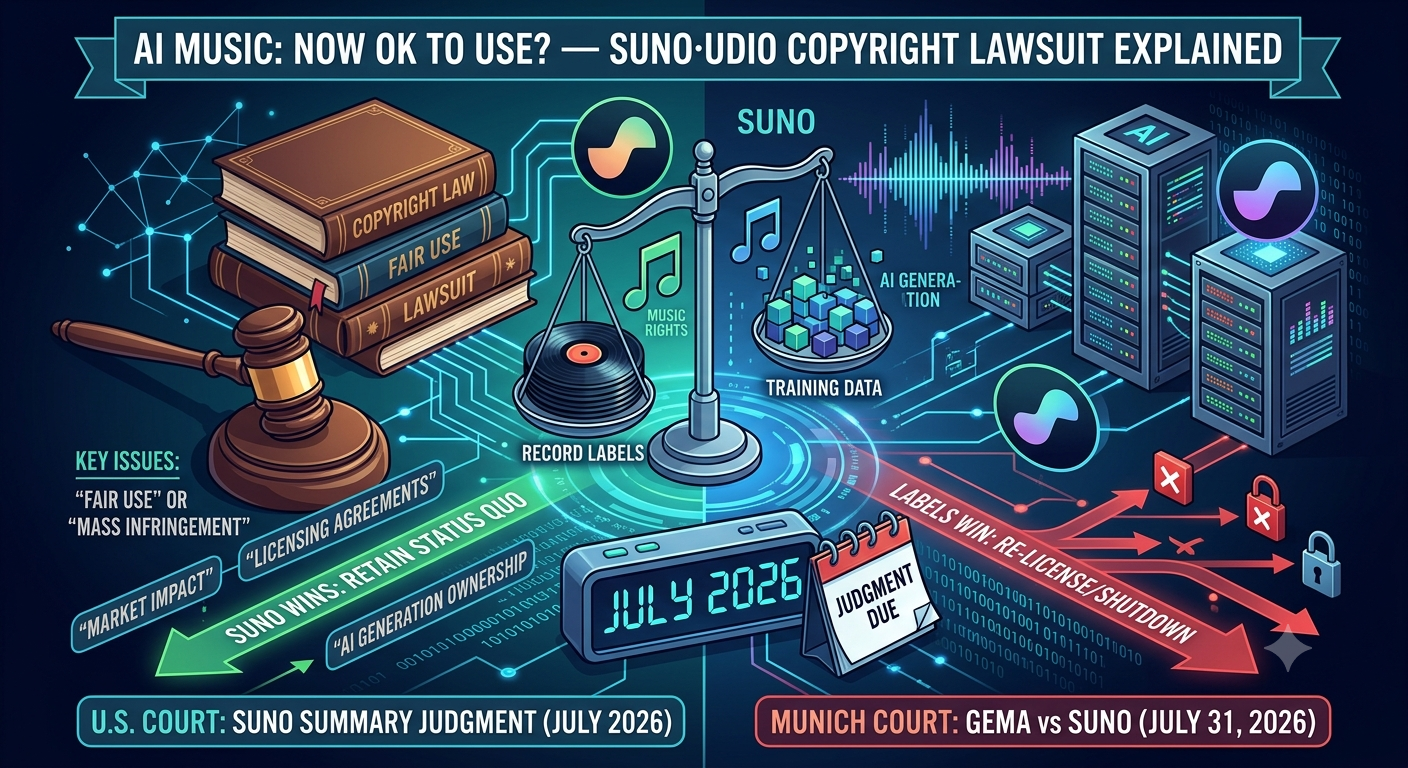
쟁점은 하나: '공정 이용'인가, '대량 침해'인가
법정 다툼의 핵심은 생각보다 단순합니다. AI가 저작권 있는 곡을 학습에 썼다는 사실 자체가 아니라, 그 결과물이 원곡과 같은 시장에서 경쟁하는가입니다.
음반사 측 논리는 이렇습니다. 추천 알고리즘은 기존 음악을 분석해 사용자를 원곡으로 안내할 뿐입니다. 반면 Suno는 원곡을 대체할 새로운 곡을 만들어냅니다. 청취자가 스트리밍에서 좋아하는 아티스트의 곡 대신, AI가 만든 비슷한 곡을 듣게 될 수도 있다는 뜻입니다. 공정 이용 판단의 네 번째 요소인 '시장 영향'에서, 원곡을 대체하는 쪽이 불리한 이유가 여기에 있습니다.
이 쟁점에 대한 첫 실질적 답은 2026년 7월, 매사추세츠 연방법원의 F. 데니스 세일러 4세 판사가 내놓습니다. 갈리는 두 갈래 미래는 명확합니다. Suno가 이기면 라이선스 없이 학습하는 지금의 방식이 업계 표준으로 굳어집니다. 지면 모든 AI 음악 회사가 학습 데이터를 다시 라이선스하거나 서비스를 접어야 하는 상황에 몰립니다. 그 중간은 없습니다.
합의한 곳도 있고, 계속 싸우는 곳도 있다
같은 소송을 당했지만 대응은 갈렸습니다.
유니버설뮤직은 2025년 10월 Udio와 합의했습니다. 보상금 지급과 함께, 2026년 출시 예정인 라이선스 기반 AI 플랫폼 협력이 포함된 조건입니다. 워너뮤직도 같은 달 Suno와 합의하면서, Suno가 워너의 티켓팅 플랫폼 송킥(Songkick)을 인수하는 딜까지 얹었습니다.
반면 소니뮤직은 두 플랫폼 모두에 대해 소송을 이어가고 있습니다. 합의금보다 원칙적인 판단을 받아내는 쪽을 택한 셈입니다. 유니버설과 소니는 Suno에 대한 소송도 계속 진행 중이며, 아직 재판 일정은 잡히지 않았습니다.
독립 음악가들도 별도로 움직였습니다. 담배 산업을 상대로 승소한 이력이 있는 로펌 헤이건스 버먼이 델가도 엔터테인먼트 로와 함께, 허락 없이 복제된 녹음의 피해를 주장하는 인디 아티스트들을 대리해 소송을 제기했습니다.
그래서 지금 AI 음악, 어떻게 써야 하나
소송 결과를 기다리는 동안 실무자가 챙길 수 있는 건 명확합니다.
1. 상업적 이용이라면 라이선스 근거를 확인하세요. 무료 체험판이나 개인용 요금제로 생성한 음악을 상업 프로젝트에 쓰는 것과, 상업적 이용을 명시한 유료 라이선스로 생성한 음악은 법적 위치가 다릅니다. 사용 중인 플랫폼의 약관에서 상업적 이용 범위를 다시 확인하세요.
2. AI 생성물 자체는 저작권 보호를 받지 못할 수 있습니다. 사람의 창작적 기여가 거의 없는 완전 AI 생성 음악은 저작권 등록이 거부되는 경우가 많습니다. 반대로 말하면, 다른 누군가가 같은 곡을 재사용해도 막을 방법이 마땅치 않다는 뜻입니다. "내가 만든 곡"이라는 감각과 법적 소유권은 다른 문제입니다.
3. 사용 근거는 기록으로 남기세요. 어떤 플랫폼에서, 어떤 라이선스로, 언제 생성했는지에 대한 기록(라이선스 캡처, 프롬프트, 생성 일시)을 남겨두면, 나중에 분쟁이 생겼을 때 최소한의 방어 근거가 됩니다.
4. "정식 라이선스 플랫폼"의 등장을 주목하세요. 유니버설-Udio, 워너-Suno 합의에는 모두 라이선스 기반 신규 서비스 출시가 포함돼 있습니다. 2026년은 지금까지의 "일단 만들고 본다" 방식에서, 음반사가 직접 참여하는 라이선스 구조로 넘어가는 과도기가 될 가능성이 큽니다. 플랫폼을 선택할 때 이 흐름을 참고할 만합니다.
앞으로 지켜봐야 할 두 개의 날짜
2026년 7월 — 매사추세츠 연방법원. Suno 약식판결 심리가 열립니다. 공정 이용 여부를 미국 법원이 처음으로 실질적으로 판단하는 자리입니다.
2026년 7월 31일 — 독일 뮌헨지방법원. 게마(GEMA) 대 Suno 판결이 나옵니다. 유럽에서 나오는 첫 주요 AI 음악 저작권 판결입니다.
2주 간격으로 붙어 있는 두 판결이 같은 방향을 가리키면, 전 세계 AI 음악 업계는 그 방향대로 재편됩니다. 서로 다른 결론이 나온다면 미국과 유럽에서 AI 음악을 만드는 규칙 자체가 갈라질 수 있습니다. 지금 쓰고 있는 플랫폼이 어느 쪽에 서 있는지, 두 판결이 나오는 순간 다시 확인해봐야 하는 이유입니다.
지금 확실한 건 하나뿐입니다. "다들 쓰니까 괜찮겠지"라는 생각으로 넘기기엔, 그 근거 자체가 몇 주 안에 바뀔 수 있다는 것입니다.
이 글은 2026년 7월 기준 공개된 정보를 바탕으로 작성했습니다. 소송은 진행 중인 사안으로, 각 당사자의 주장은 아직 법원의 최종 판단을 받지 않은 상태입니다. 개별 사안에 대한 법률적 판단이 필요하다면 전문가의 자문을 구하시길 권합니다.
Here is the English translation of the text.
---
### AI Music: Is it Safe to Use Now? — What the Suno & Udio Copyright Lawsuit Teaches Us
If you've ever created music with AI, you've likely faced this question at least once: "Can I use this commercially?" It was an easy question to defer. After all, everyone else was doing it. However, in July 2026, the court is about to provide an answer to that question.
**What is Happening Now**
The story dates back to June 2024. The Recording Industry Association of America (RIAA), representing Universal Music, Sony Music, and Warner Music, sued AI music generation platforms Suno and Udio for copyright infringement. The core allegation is that both companies used millions of copyrighted recordings for training without permission, licensing, or compensation.
Suno and Udio presented fair use as their defense logic. Their argument is that AI training is a creative act that transforms the original song, and therefore should be legally protected. This fight has continued for nearly two years and has now entered a decisive phase.
In May 2026, the record labels requested the court add 61,026 recordings to the lawsuit based on the results of analyzing Suno's training data with audio fingerprinting technology. Their claim is that while 560 songs were explicitly named in the initial complaint, in reality, copyrighted recordings on the scale of millions of songs were included in the training data.
**The Issue is Simple: 'Fair Use' or 'Mass Infringement'**
The core of the legal battle is simpler than expected. It is not the fact itself that the AI used copyrighted songs for training, but rather whether the resulting output competes in the same market as the original song.
The record labels' logic is this: recommendation algorithms merely analyze existing music to guide users to the original song. Conversely, Suno creates new songs that replace the original. This means that instead of listening to their favorite artist's songs on streaming services, listeners might end up listening to similar songs created by AI. This is why, regarding the fourth factor of fair use analysis, 'market effect,' the side that replaces the original is at a disadvantage.
The first substantive answer to this issue will be delivered in July 2026 by Judge F. Dennis Saylor IV of the U.S. District Court for the District of Massachusetts. The two diverging futures are clear. If Suno wins, the current method of training without a license will become solidified as the industry standard. If it loses, all AI music companies will be forced into a situation where they must re-license their training data or shut down their services. There is no middle ground.
**Some Settled, Some Continue to Fight**
Despite facing the same lawsuit, the responses diverged.
Universal Music settled with Udio in October 2025. The terms include the payment of compensation and collaboration on a license-based AI platform scheduled for release in 2026. Warner Music also settled with Suno in the same month, adding a deal where Suno acquired Songkick, Warner's ticketing platform.
Conversely, Sony Music is continuing its lawsuit against both platforms. It has chosen the path of obtaining a principled judgment rather than a settlement amount. Universal and Sony are also still proceeding with the lawsuit against Suno, and a trial schedule has not yet been set.
Independent musicians have also moved separately. Hagens Berman, a law firm with a history of winning against the tobacco industry, teamed up with Delgado Entertainment Law to file a lawsuit representing indie artists claiming damages from recordings copied without permission.
**So, How Should AI Music Be Used Now?**
While waiting for the lawsuit results, there are clear steps practitioners can take.
**1. If it is for commercial use, verify the basis of the license.**
Using music generated with a free trial or personal plan for commercial projects is legally distinct from music generated with a paid license that explicitly states commercial use. Double-check the scope of commercial use in the terms and conditions of the platform you are using.
**2. The AI-generated output itself may not receive copyright protection.**
Copyright registration for completely AI-generated music with almost no human creative contribution is often rejected. To put it another way, if someone else reuses the same song, there is no appropriate way to stop them. The feeling that "this is a song I made" and legal ownership are different matters.
**3. Keep records of the basis for use.**
If you keep records (license captures, prompts, generation date and time) of which platform, under which license, and when you generated it, it will serve as a minimum defensive basis if a dispute arises later.
**4. Pay attention to the emergence of "officially licensed platforms."**
The Universal-Udio and Warner-Suno settlements both included the release of new license-based services. There is a high possibility that 2026 will be a transitional period moving from the "create first, worry later" approach used until now, toward a licensed structure in which record labels directly participate. It is worth referring to this trend when choosing a platform.
**Two Dates to Watch Moving Forward**
**July 2026** — U.S. District Court for the District of Massachusetts. The summary judgment hearing for Suno will be held. This is the first time a U.S. court will substantively judge fair use.
**July 31, 2026** — Munich Regional Court, Germany. The GEMA v. Suno ruling will be released. This is the first major AI music copyright ruling to come out of Europe.
If the two rulings, spaced two weeks apart, point in the same direction, the global AI music industry will be reorganized in that direction. If conflicting conclusions are reached, the rules themselves for creating AI music in the US and Europe could diverge. This is why you should re-check which side the platform you are currently using stands on the moment the two rulings are released.
Only one thing is certain right now. To pass it off with the thought that "it must be okay since everyone is doing it" is dangerous because the basis for that thought could change within a few weeks.
*This article was written based on information publicly available as of July 2026. The lawsuit is an ongoing matter, and the arguments of each party have not yet received a final judgment from the court. If a legal judgment on an individual matter is necessary, we recommend seeking expert advice.*

