한국음악저작권협회가 지난달 28일에 발표한 "AI 활용 음악저작물"에 관한 새로운 ‘신고 및 등록 규정’이
관련 업계와 음악시장에서 ‘AI 음악 전면 허용’으로 오해석되면서 혼란을 초래하는 해프닝이 있었다.
음악업계에 종사하는 입장에서 지금 음악산업에 일어나는 AI 음원 이슈는
단순한 "기술 변화"라 보기보다 음악산업의 구조 자체가 흔들릴 수 있다는
우려를 내포하고 있다고 생각하기때문인 것이다.
그도 그럴 것이 2026년 7월 21일, 프랑스 음악 스트리밍 서비스 Deezer는 충격적인 수치를 공개했는데,
일일 90,000곡의 AI 음악이 업로드되고, 전체 신규 음악의 50%를 넘었다고 한다.
분당 63곡. 초당 1곡. 당신이 이 문장을 읽는 순간에도 AI 음악이 쏟아져 들어오고 있다는 소리다.
이에 몇 차례 연재를 통해 현황과 대처방안에 대해 조금더 알기 쉽게 알리고,
업계분들과 공공 영역에서 노력하시는 다양한 분들과 고민을 나누어 보았으면 한다.
------------------------------------------
SECTION 1: 무엇이 일어나고 있는가?
* 표면적 변화
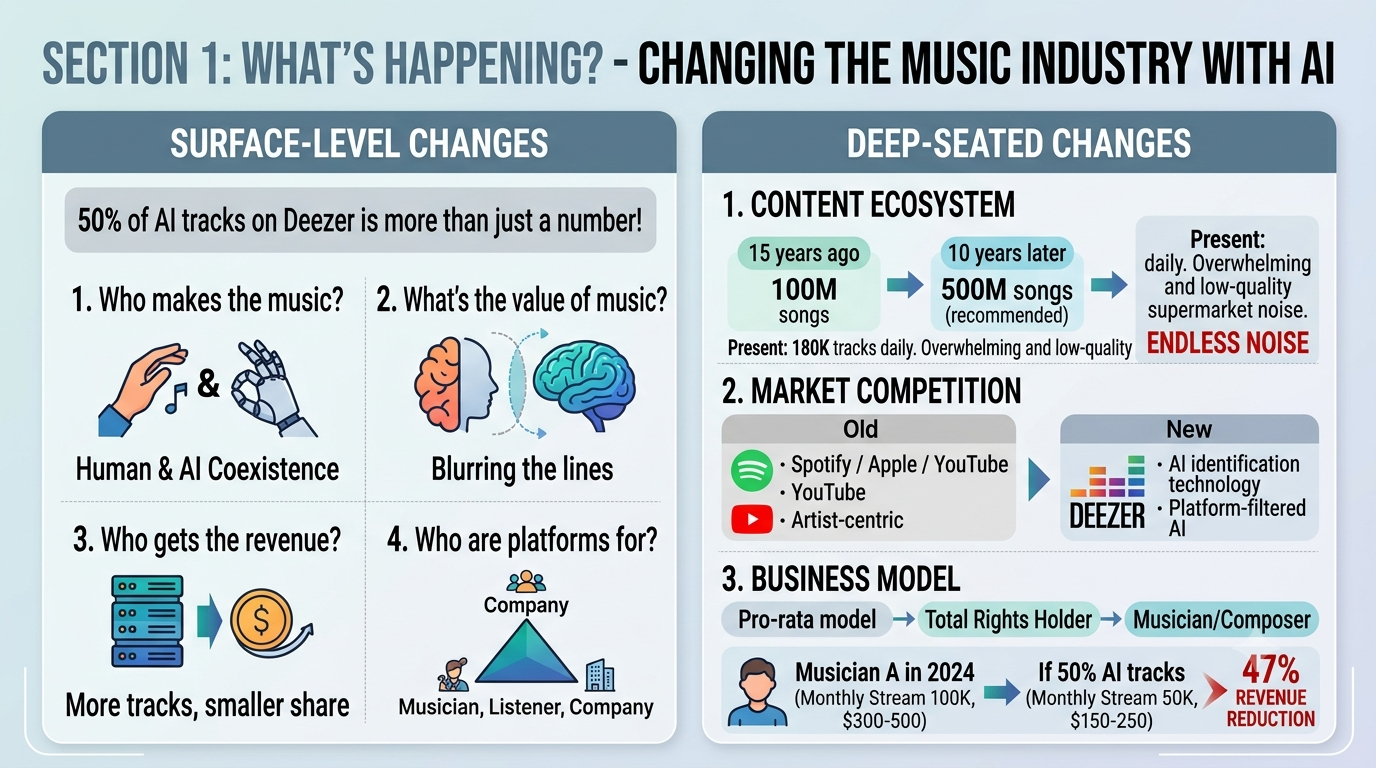
Deezer의 50%는 단순히 "AI 곡이 많아졌다"는 뜻이 아니다.
이는 음악산업의 가장 근본적인 질문들을 던진다:
누가 음악을 만드는가? → 이제 인간과 AI가 함께
음악의 가치는 무엇인가? → AI와 인간의 차이가 불분명해짐
수익은 누가 가져가는가? → 곡의 수는 증가, 개별 뮤지션의 몫은 감소
플랫폼은 누구를 위해 존재하는가? → 뮤지션? 청자? 기업?
* 깊이 있는 변화
이 변화는 세 가지 축에서 동시에 진행되고 있다:
- 축 1: 콘텐츠 생태계의 변화
지난 15년, 음악 스트리밍의 약속은 명확했다.
"모든 음악을 한 곳에서."
Spotify가 출범했을 때, 1억 곡의 음악은 "거의 모든 노래를 찾을 수 있다"는 뜻이었다.
10년 뒤 5억 곡이 되었을 때도 마찬가지였다.(양적 팽창 시기, 추천 영역으로 변화된 계기)
이제는 다르다.
Deezer에 매일 18만 곡이 올라오는 시대에 "모든 음악"은 의미가 없다.
선택지가 많다는 것은 좋지만, 대부분은 중복되고 평범하고 구분 불가능한 AI 음악이다.
음악 스트리밍은 "거대한 도서관"에서 "끝없는 잡음"으로 변하고 있다.(대형마트는 되었지만 품질이 문제)
- 축 2: 시장 경쟁 구도의 변화
예전의 경쟁은 단순했다.
Spotify: 음악 카탈로그 최대 + 추천 알고리즘
Apple Music: 프리미엄 경험 + 독점 콘텐츠
YouTube Music: 영상 + 음악 통합
이제 경쟁의 최전선은 다르다.
"AI를 얼마나 잘 걸러내는가"가 차별화 포인트다.
Deezer가 50%를 공개한 것은 이를 증명한다. 단순히 "우리는 AI 음악도 배포합니다"라는 고백이 아니라,
"우리는 AI를 식별할 수 있습니다"라는 기술력 선전이다.
더 정교한 AI 탐지 알고리즘을 가진 플랫폼이 승자가 된다.
(플랫폼의 딜레마, 당장 돈이 되는 수익원은 아니다. Pro-rata 방식의 수익배분은 총량의 법칙이 존재한다.
하지만 감성재인 음악의 퀄리티 저하는 고객을 이탈 시킨다. 팬덤 마케팅에도 아티스트가 있어야 생존한다.)
- 축 3: 음악산업 비즈니스 모델의 변화
가장 심각한 변화는 여기다.
음악 스트리밍의 로열티 구조는 간단하다:
총 수익의 70%(일반적인 글로벌 기준, 국가마다 상이할 수 있음) → 권리사(유통사, 기획사)에게 배분
→ 개별 뮤지션/작곡가에게 분배 곡이 많을수록 파이는 같은데 나눠야 할 조각이 많아진다.
# 구체적 예시:
뮤지션 A가 2024년 Deezer에서:
월간 스트림: 100,000회
예상 수익: $300~500
만약 AI 음악이 50%가 되면:
같은 시청자, 같은 시간에
월간 스트림: 50,000회 (AI 곡과 경쟁)
예상 수익: $150~250
수익이 47% 감소한다.
곡의 재생 시간은 정해져 있다. 무한정 증가하지 않는다.
더 많은 음악이 들어올수록 개별 뮤지션의 몫은 줄어든다.
단순하고, 비정한 수학이다.
------------------------------------------
이 글을 당신의 뮤지션 친구에게, 음악 정책 담당자에게, 플랫폼 리더에게 공유해 주세요.
변화는 한 사람의 생각에서 시작되고, 당신이 그 사람이 될 수 있기에,
알고 있었던 정보도 다시 짚어 보았으면 합니다.
SECTION 1: What is Happening?
Surface-Level Changes Deezer’s 50% AI music content isn't just about a "rise in AI tracks." It raises fundamental questions about the music industry:
- Who creates music? → Humans and AI now co-create.
- What is the value of music? → The boundary between AI and human music is blurring.
- Who receives the revenue? → Track counts are surging, but individual musicians' earnings are shrinking.
- Who do platforms exist for? → Musicians? Listeners? Corporations?
Deep-Seated Changes This shift is happening simultaneously across three main axes:
Axis 1: Transformation of the Content Ecosystem Over the past 15 years, music streaming made a clear promise: "All the music in one place."
- 100M Songs (Spotify Launch): Meant you could find almost any song.
- 500M Songs (10 Years Later): Still held true during a period of quantitative expansion, driving the shift toward recommendation engines.
- Present Day: With 180,000 tracks uploaded to Deezer daily, "all the music" has lost its meaning. Abundant choices mean little when most are repetitive, mediocre, and indistinguishable AI tracks. Streaming is turning from a "grand library" into "endless noise."
Axis 2: Shifting Market Competition Competition used to be simple:
- Spotify: Largest music catalog + recommendation algorithms
- Apple Music: Premium experience + exclusive content
- YouTube Music: Video + music integration
Now, the front line of competition has moved. Differentiation depends on "how effectively a platform filters out AI." Deezer disclosing its 50% figure isn't an admission that they distribute AI music; it’s a demonstration of their technical ability to identify it. Platforms with superior AI detection algorithms will win.
Platform Dilemma: AI detection isn't an immediate revenue driver, and pro-rata payout models face a zero-sum limit. However, degrading the quality of music—an emotional good—drives users away. Even fandom-based marketing requires real artists to survive.
Axis 3: Overhaul of the Music Business Model This is where the impact hits hardest.
The traditional streaming royalty structure is straightforward:
- ~70% of total revenue → Rights holders (distributors, agencies) → Split among individual musicians/songwriters.
When more tracks enter the pool, the total pie stays the same size while the number of slices skyrockets.
Concrete Example:
- Musician A on Deezer (2024): 100,000 monthly streams → Estimated revenue: $300–$500
- If AI tracks reach 50%: With the same audience and listening time, Musician A gets 50,000 streams (competing against AI) → Estimated revenue: $150–$250
- Result: A 47% drop in income.
Listening time is finite and cannot expand endlessly. As more music floods the platform, individual artist payouts shrink. It is simple, cold mathematics.


